Corporate Engagements
Safe Listening and Hearing Healthcare
Focused on maintaining auditory well-being in the workplace, these seminars highlight the adverse effects of prolonged noise exposure on overall health and productivity. Practical insights are shared to implement noise reduction strategies and create a hearing-friendly work environment for both individuals and organizations.
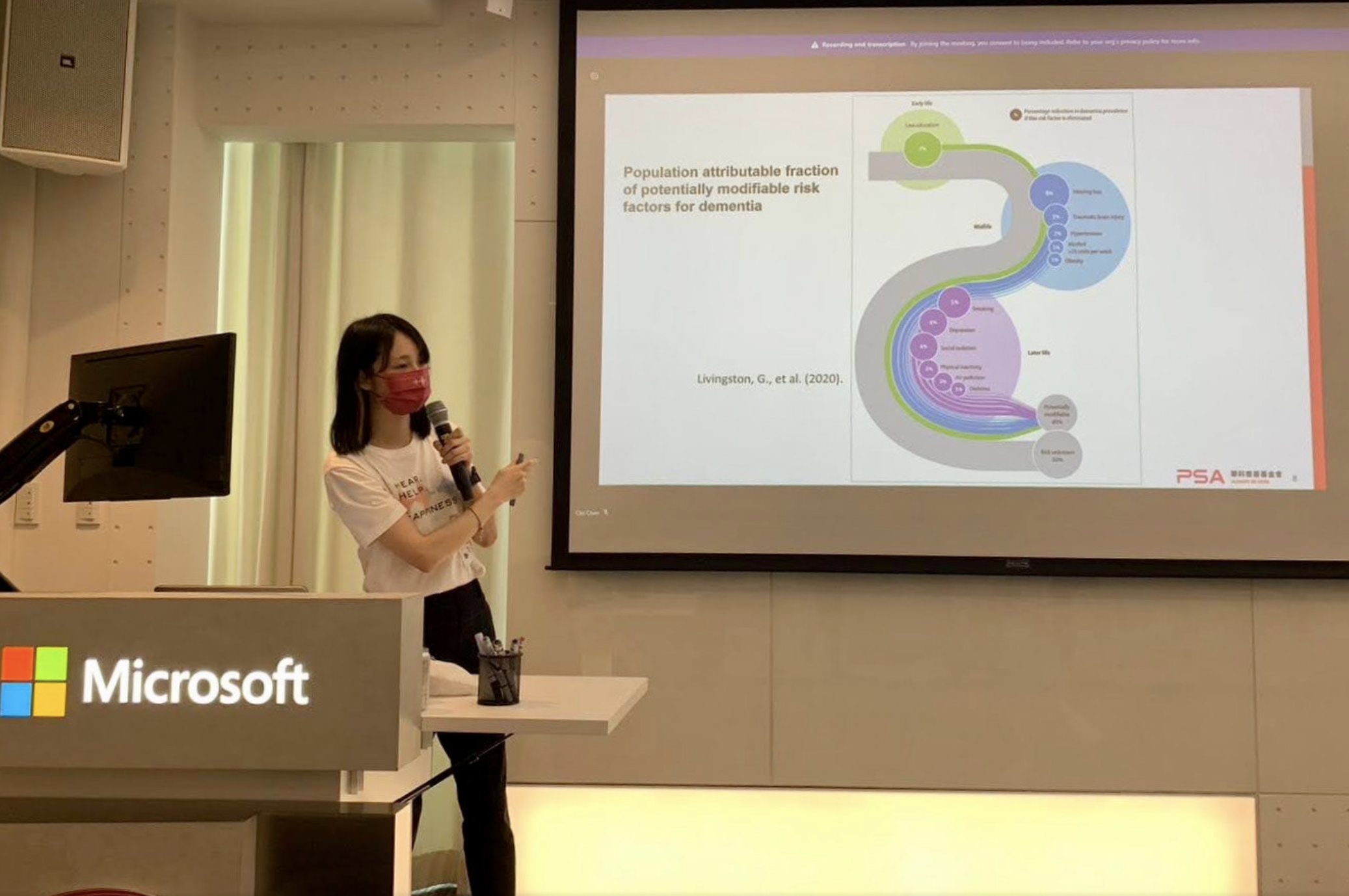
The "Safe Listening" Framework
A standardized 6-step guideline designed for corporate employees to easily mitigate occupational and recreational noise risks in their daily routines.
Keep personal audio device volume below 60% when listening to ensure safe auditory levels.
Minimize the duration of continuous noise exposure and take regular breaks to allow ears to rest.
Utilize mobile applications to limit maximum listening volume and track daily noise exposure.
Proactively use ear protection (e.g., earplugs) or physically move to a quieter area when necessary.
Watch for critical indicators such as experiencing tinnitus or trouble understanding speech in noisy settings.
Commit to yearly hearing screenings, especially for those regularly exposed to occupational noise.
Corporate Engagement Roster
University Guest Lectures
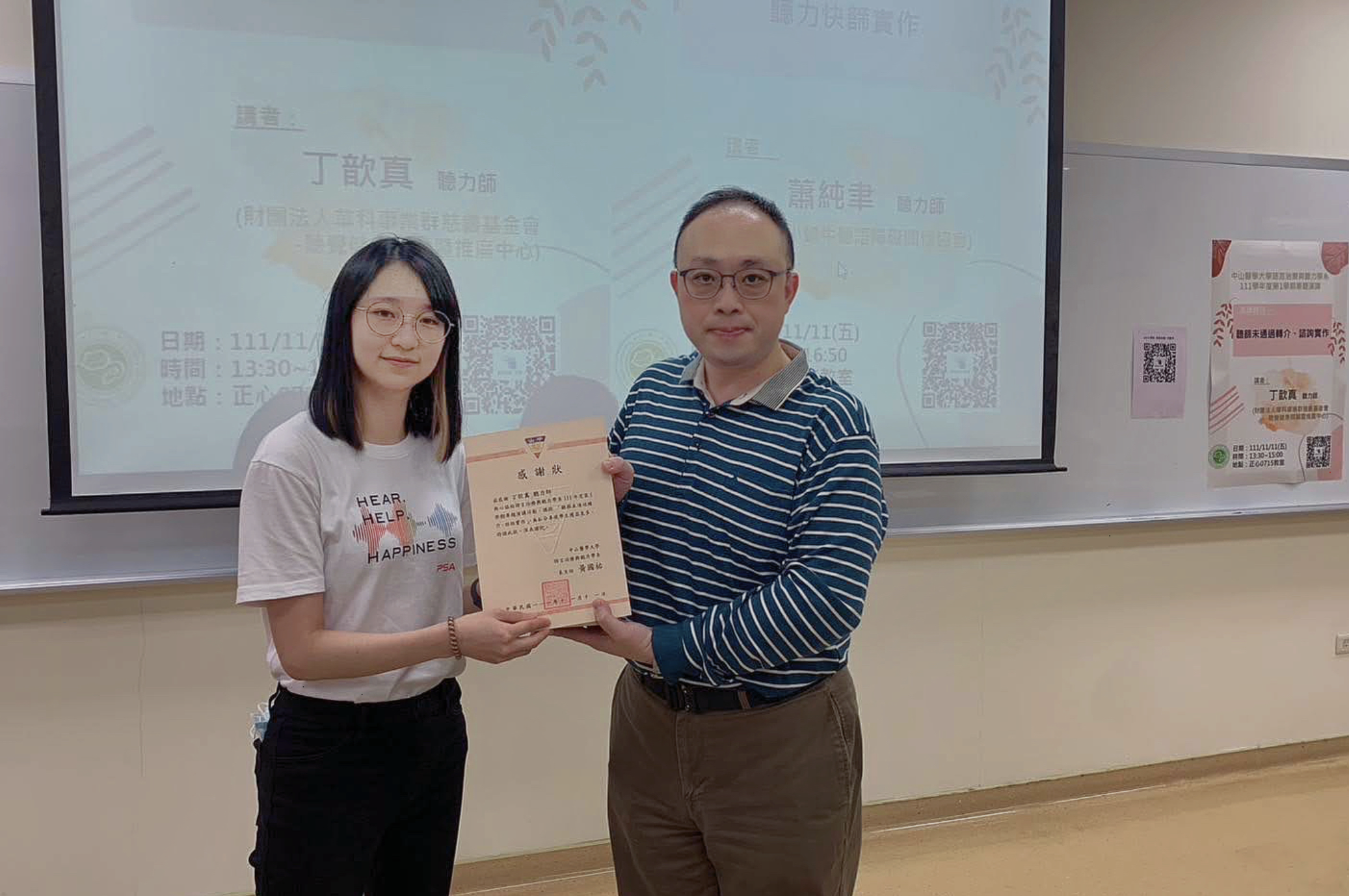
Hearing Healthcare in Older Adults
Delving into the unique challenges of hearing healthcare for the aging population in Taiwan. These lectures explore innovative approaches to address age-related issues, emphasizing the crucial roles of technology, community involvement, and interdisciplinary collaboration to promote elder well-being.
Teleaudiology & Online Experiments
This lecture series explores the pivotal role of teleaudiology in enhancing healthcare accessibility and efficiency. It provides thorough insights into conducting online listening experiments, teaching students how to improve experimental design and data collection in modern audiology research.
Invited By Institutions
Publications & Presentations
Ting, H. C., Huang, Y. Y., Ho, P. H., Tsai, H. T., Chu, C. H., Chen, P. Y., & Lin, H. C. Validation of the Effectiveness of Three-Step Hand Rub Hearing Screening. Journal of the American Academy of Audiology. 36(4), 296–308.
https://doi.org/10.3766/jaaa.240094
Ting, H. C., & Li, P. C. Measurement of Hair Dryer Noise Levels and Potential Auditory Health Risks. Academic seminar of the Speech-Language-Hearing Association of Taiwan.
View Research Project
Ting, H. C., Wu, L. Y., Huang, Y. Y., & Lin, L. S. Social Return on Investment of Auditory Health Care: A Case Study of the Hearing Aid Bank. Journal of the Speech-Language-Hearing Association of Taiwan. 50: 43-54.
https://doi.org/10.6143/JSLHAT.202406_(50).0003
Ting, H. C., & Huang, Y. Y. Sensitivity and specificity of hearing tests for screening hearing loss in older adults. Journal of Otology, 18(1), 1-6.
https://doi.org/10.1016/j.joto.2022.11.003
Ting, H. C., Lin, H. C., & Chang, Y. P. Speech Audiometry: The Critical Tool in Determining Cochlear Implant Candidacy and Review of CI Indication. Journal of the Speech-Language-Hearing Association of Taiwan. 46: 73-86.
https://doi.org/10.6143/JSLHAT.202206_(46).0004
Ting, H. C., & Li, P. C. A preliminary study of classifying Mandarin monosyllables with EEG signals of covert speech, overt speech, and speech perception. The 3rd Japan-Taiwan Symposium on PSYCHOLOGICAL AND PHYSIOLOGICAL ACOUSTICS. (Webinar)
View Research ProjectTing, H. C., Hsu, H. M., & Lin, H. C. Cochlear Implantation in Malformed Inner Ear. Academic seminar of the Speech-Language-Hearing Association of Taiwan.