Adjunct Lecturer: Community-Based Aural Rehabilitation
- The Objective: To bridge the critical gap between theoretical audiology knowledge and real-world geriatric care for future audiologists, while fulfilling the University's Social Responsibility (USR).
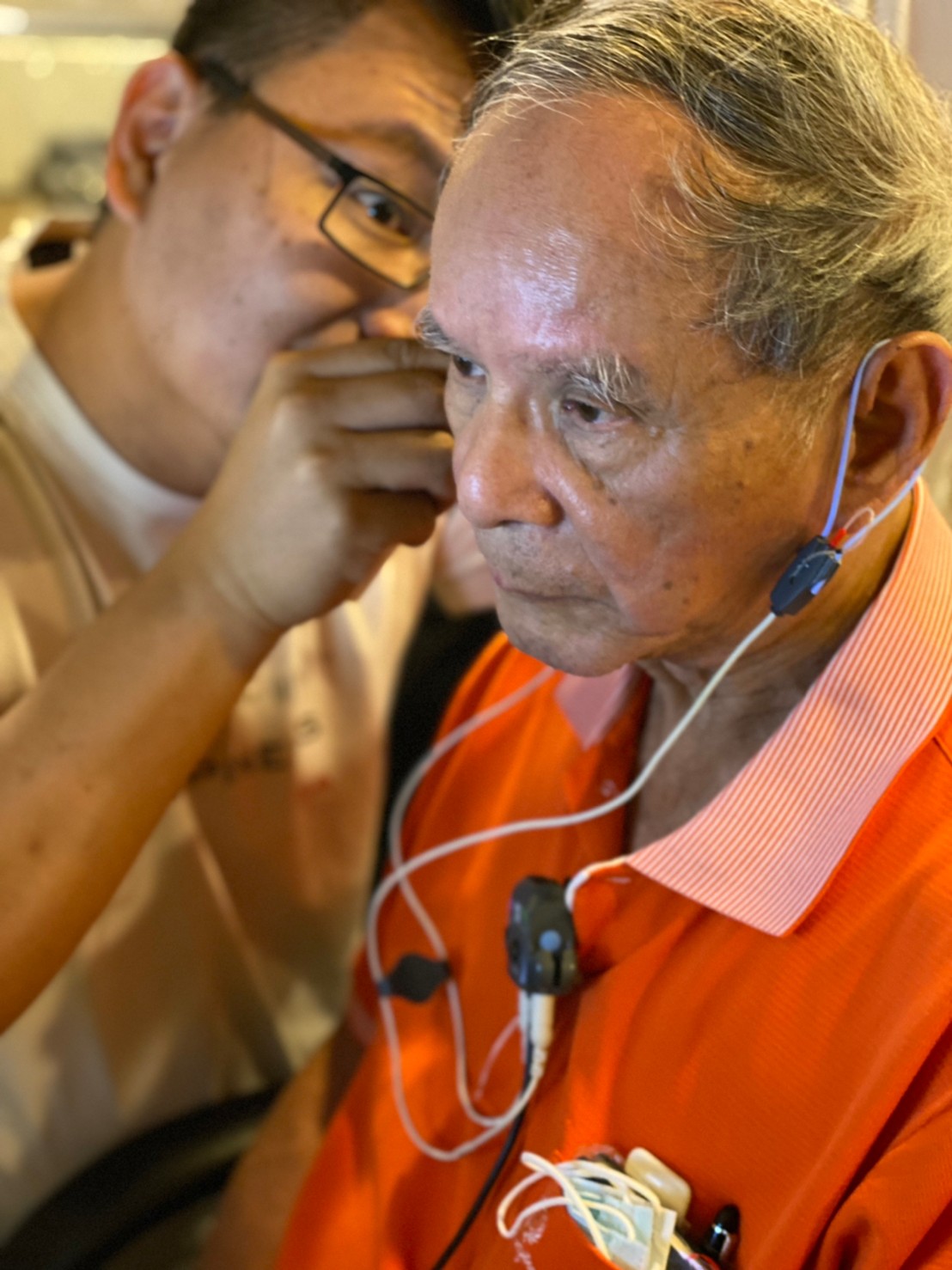
- The Action: Designed and instructed an immersive 13-week clinical internship program focusing on community-based auditory rehabilitation. Guided students to autonomously develop and execute end-to-end care plans for local elders.
- The Impact: Empowered students with practical, hands-on clinical experience while providing accessible, free hearing assessments and discounted assistive devices to the surrounding community.
Empowering Future Audiologists
This specialized course was meticulously designed to instruct students on the paramount importance and precise methods of conducting auditory assessments specifically tailored for the elderly. Rather than relying solely on textbook scenarios, I guided students through a rigorous, hands-on mentorship program where they were required to independently develop and execute three core clinical deliverables:
Assessment Plans
Crafting comprehensive strategies to evaluate the unique audiological and cognitive profiles of older adults.
Assistive Device Fitting Plans
Programming and adjusting hearing aids utilizing real-world electroacoustic verification and patient feedback.
Auditory Training Plans
Designing targeted aural rehabilitation exercises to maximize the long-term benefits of the prescribed devices.
- Practicing on standardized simulated patients (e.g., classmates or actors).
- Conducting assessments in strictly controlled, perfectly soundproof labs.
- Relying on one-off evaluations that focus purely on textbook protocols.
- Engaging with real elderly individuals, often navigating complex cognitive or physical needs.
- Executing clinical assessments and fittings in noisy, unpredictable community settings.
- 13-week continuous tracking, driving dynamic adjustments and building long-term trust.
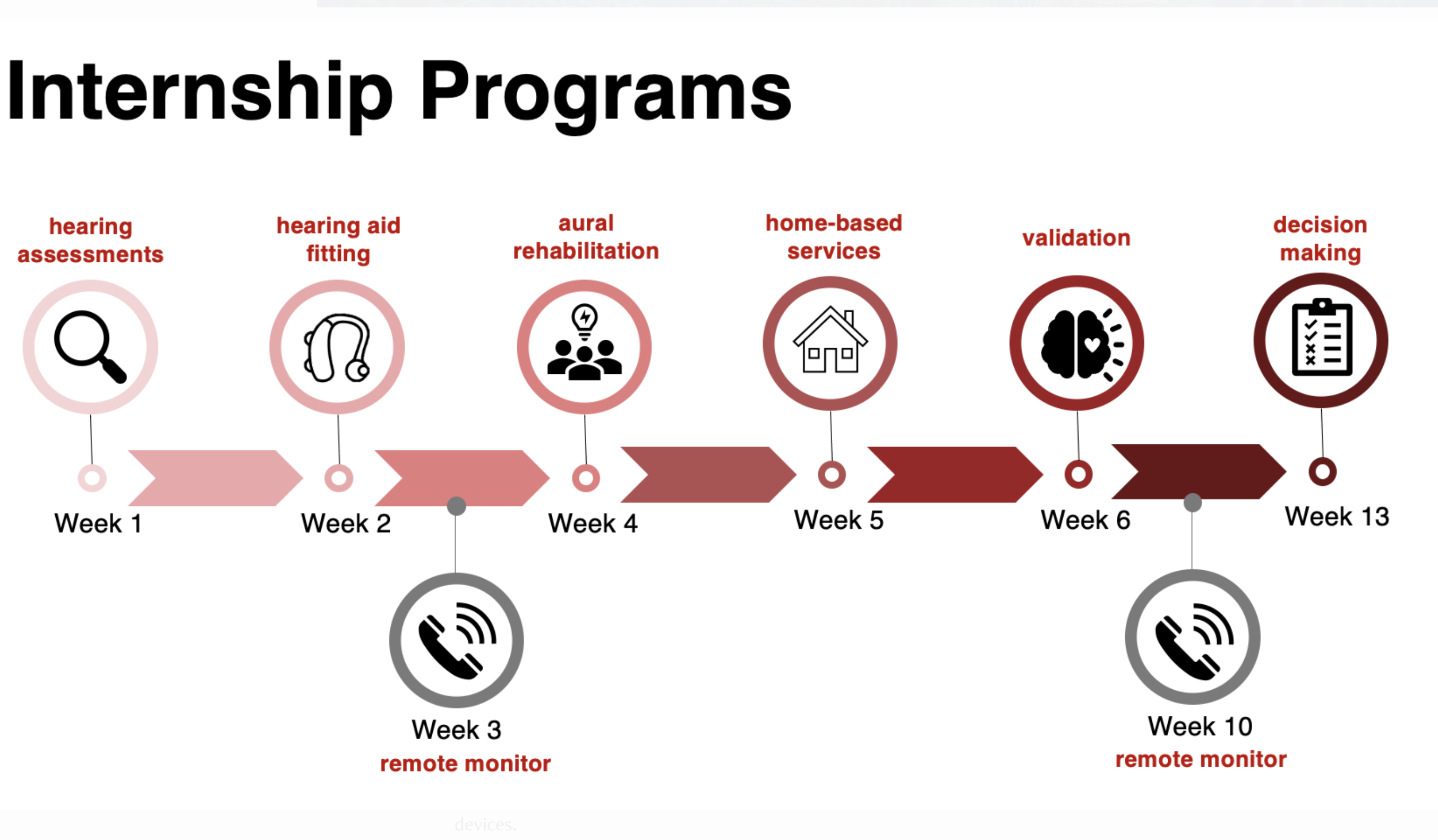
13-Week Clinical Internship Roadmap
The curriculum was structured as an end-to-end clinical journey, taking students from initial diagnosis through continuous remote monitoring and final decision-making.
The Clinical Supervision Loop
Empowering students to work independently requires a rigorous safety net. I implemented a strict 3-step supervision loop to ensure patient safety and guarantee that the highest clinical standards were met at all times.
Pre-Clinic Briefing
Rigorously reviewing students' customized care plans and anticipating potential on-site challenges before any patient interaction occurs.
On-Site Shadowing
Providing direct observation during community visits, offering real-time guidance, and intervening with clinical rescue when necessary.
Post-Clinic Review
Facilitating in-depth case debriefings to analyze outcomes, correct mistakes, and refine strategies for the following week's session.
University Social Responsibility (USR)
Beyond benefiting students' academic and practical growth, this program was deeply rooted in MacKay Medical College's USR initiative.
The clinical subjects participating in this course were elders sourced directly from the surrounding community of the college. By providing completely free audiological services to these individuals, the program functioned as a vital local healthcare asset. Furthermore, if subjects demonstrated significant clinical improvement at the conclusion of the 13-week course and expressed interest in continuing rehabilitation, we successfully facilitated access to discounted hearing devices.