The Effects of the Signal-to-Noise Ratio of Brainwave on Classification Accuracy of Automatic Speech Recognition
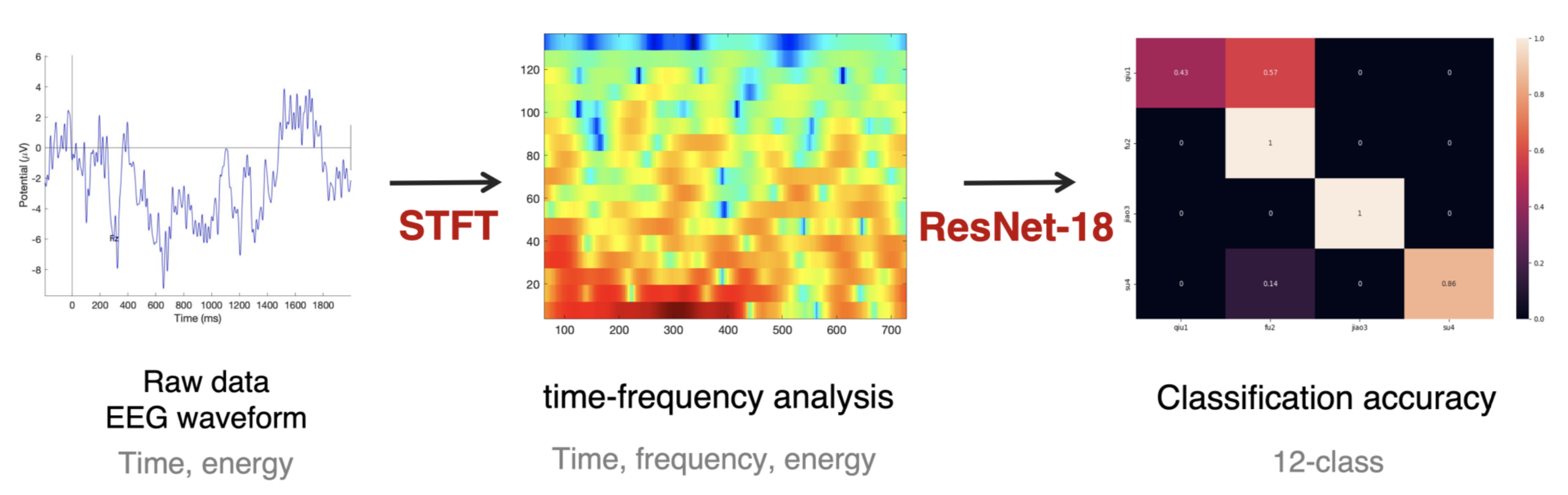
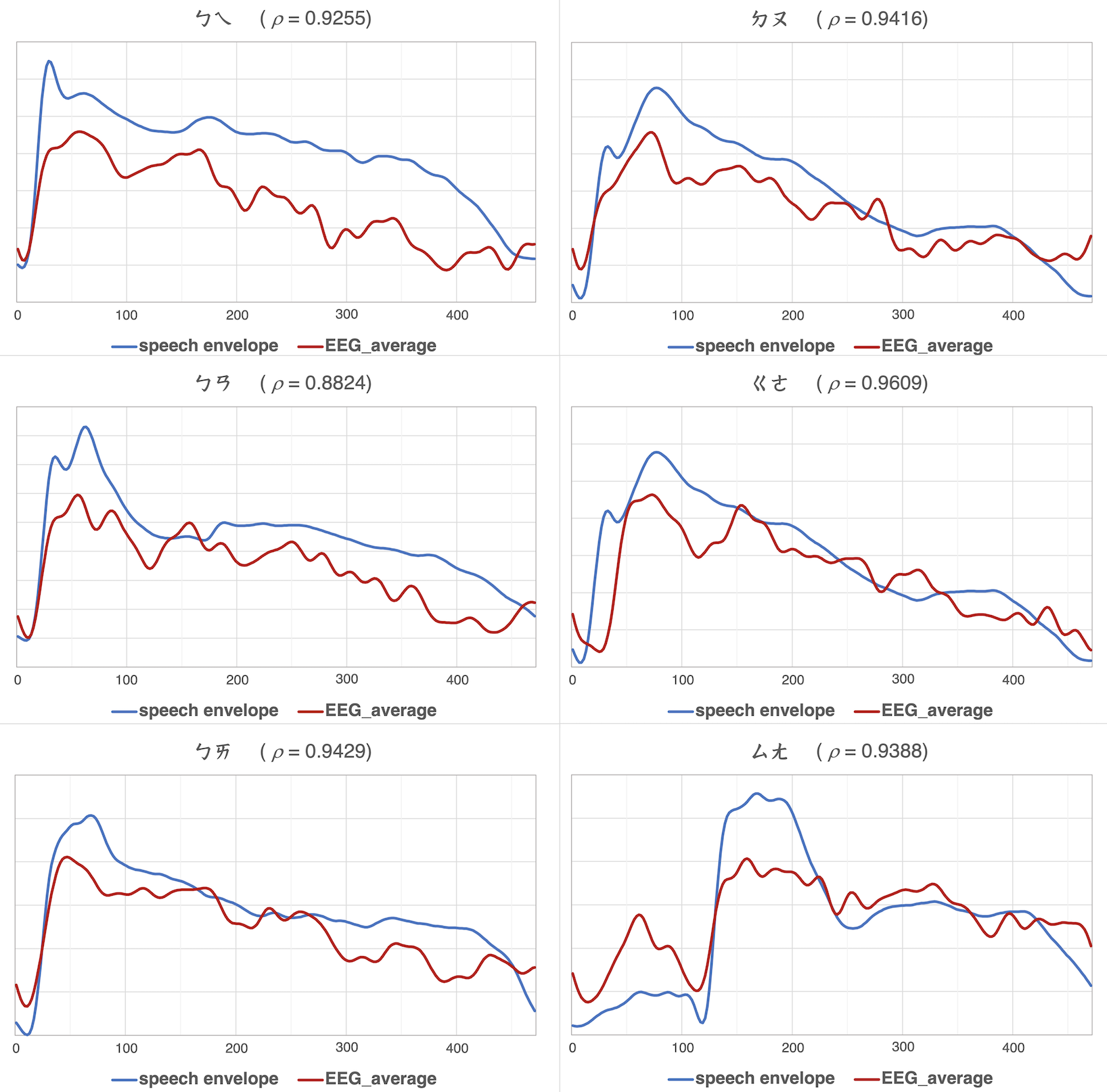
This study explores cortical envelope tracking of EEG signals, utilizing machine learning to enhance signal-to-noise ratio (SNR) by employing speech envelope features from EEG epochs. Twelve Mandarin monosyllables served as target words, with subjects repeating them overtly or covertly. Cross-correlation coefficients between EEG data and speech envelope were computed, and ResNet18 was employed for classification using either "highest cross-correlation coefficients" or "fixed duration" EEG epochs.
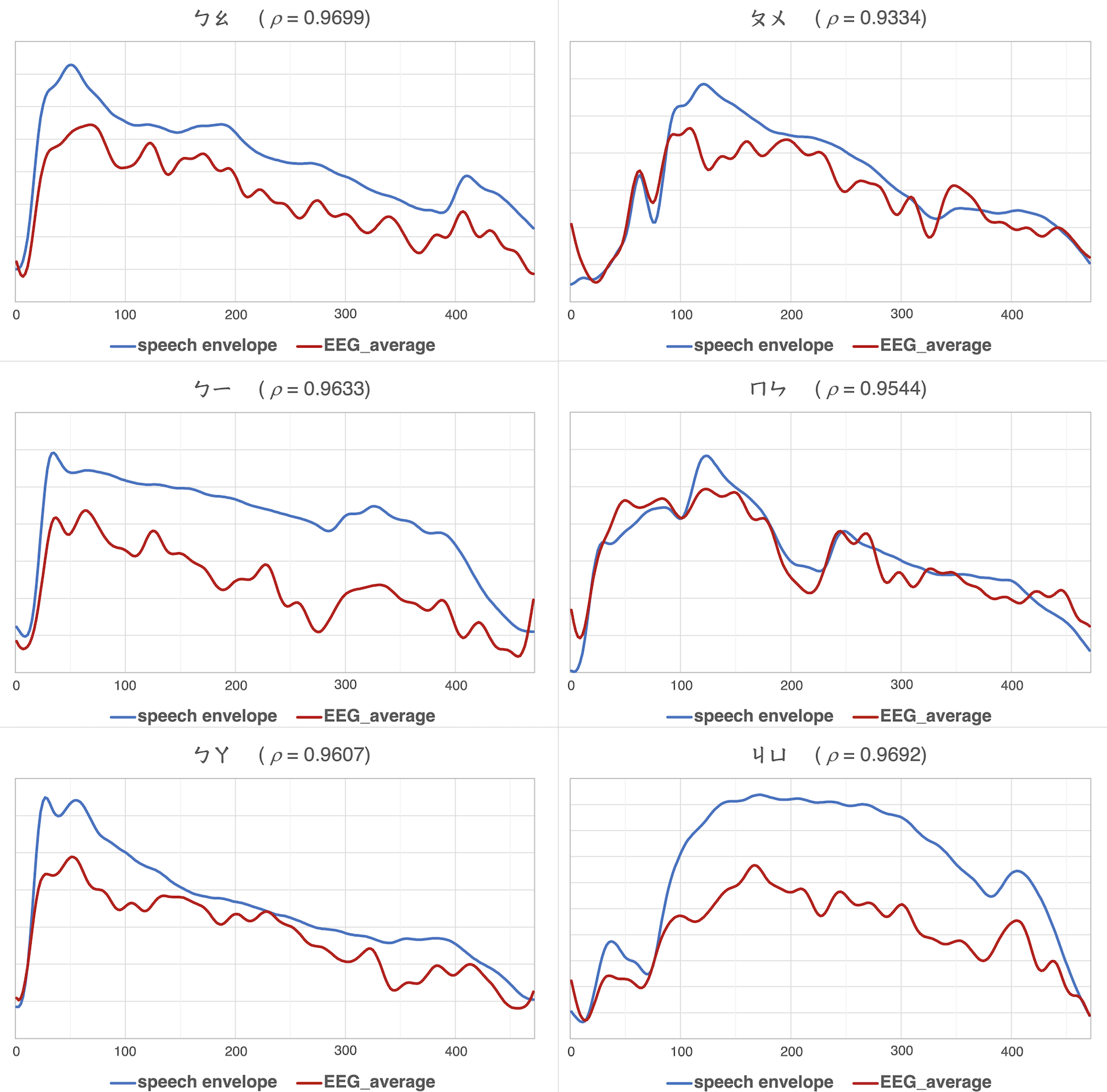
Results revealed moderate positive correlations during speech perception, overt speech, and covert speech. In single-trial EEG tests, "highest cross-correlation coefficients" yielded 50.00% and 35.71% accuracies for overt and covert speech, respectively. In 3-trial averages, these accuracies improved to 70.00% for overt speech and 50.00% for covert speech, showcasing the highest accuracy. While cortical envelope tracking manifested in all speech conditions, the study suggests the need to enhance SNR after extracting speech envelope features for optimal machine learning model accuracy.
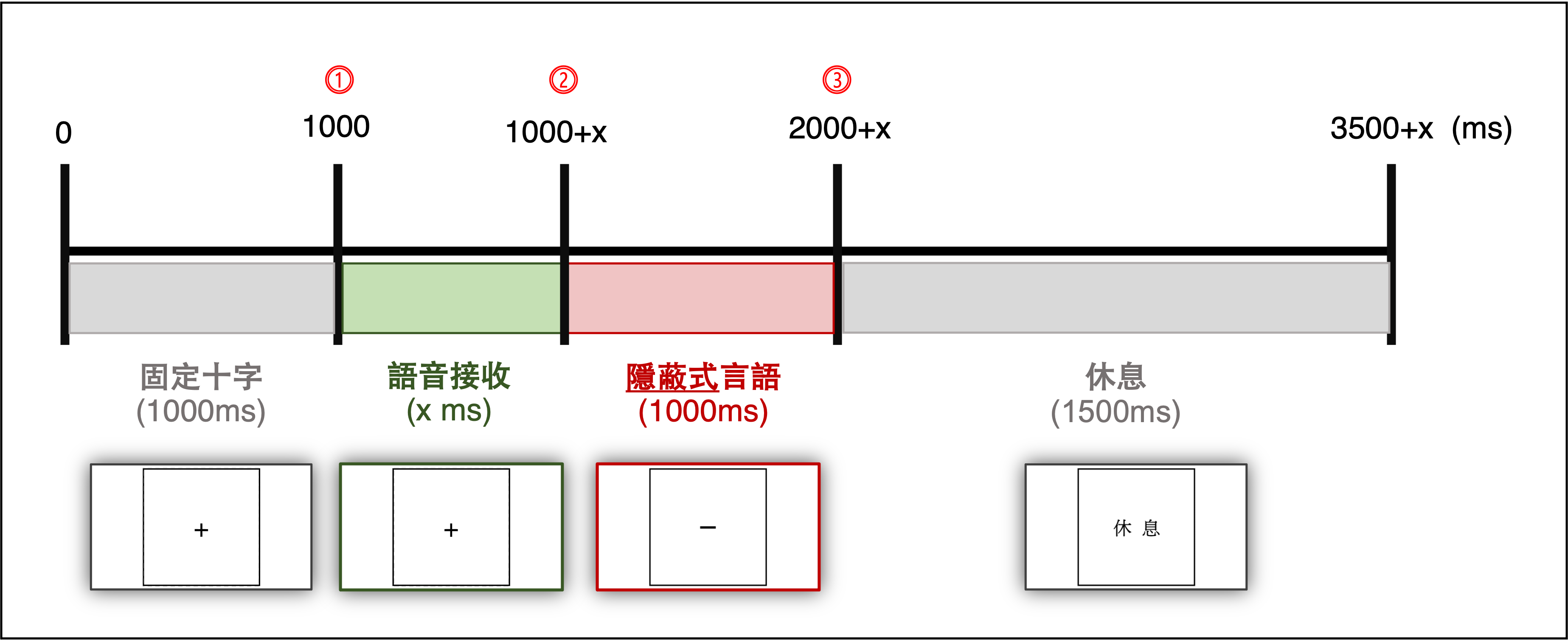
Experimental Design
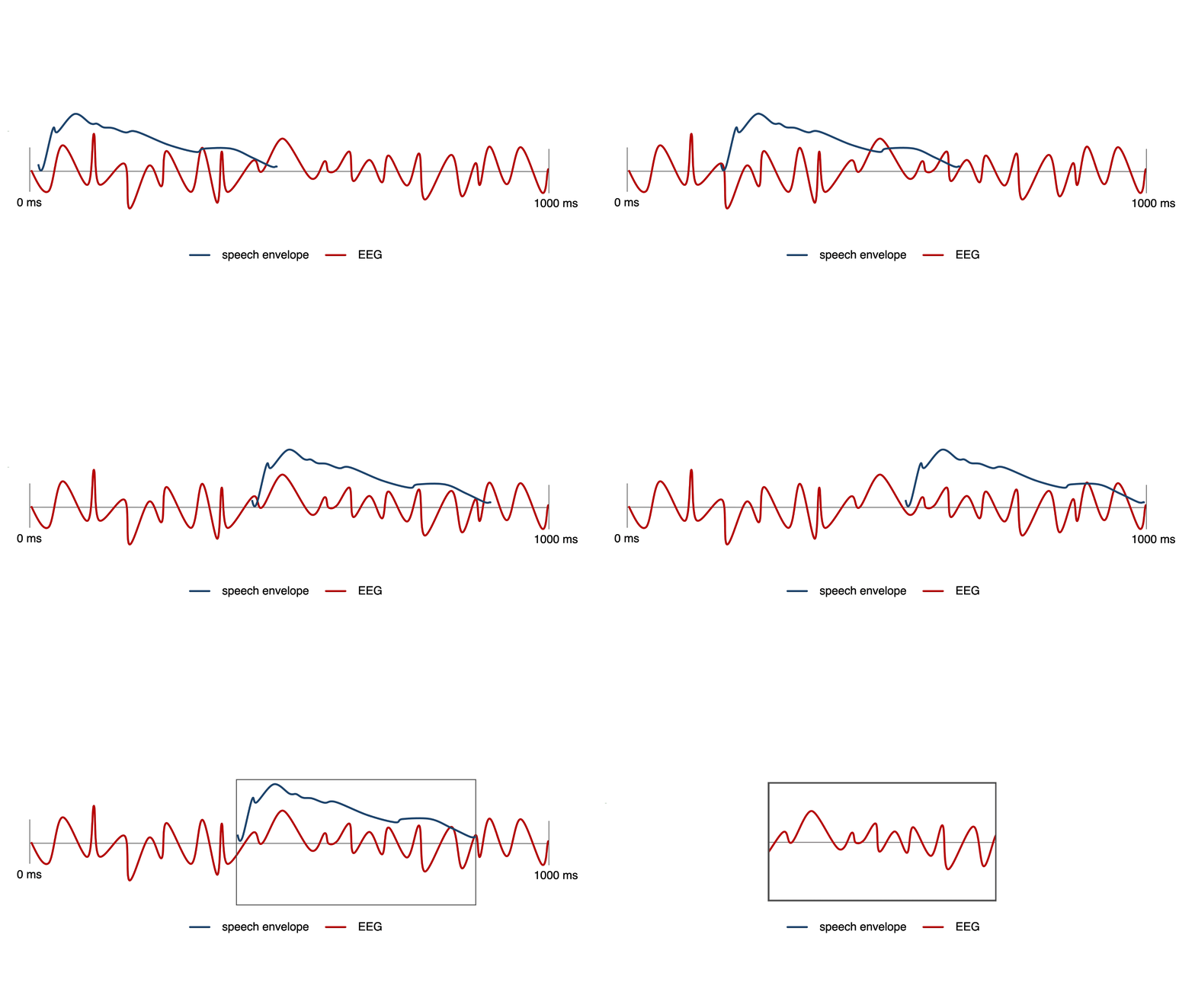
Analysis Method
Results
Publications & Presentations
[Master's Thesis]
Ting, H. C. (2022). The Effects of the Signal-to-Noise Ratio of Brainwave on Classification Accuracy of Automatic Speech Recognition. MacKay Medical College.
[Oral Presentation]
Ting, H. C., & Li, P. C. (2021). A preliminary study of classifying Mandarin monosyllables with EEG signals of covert speech, overt speech, and speech perception. The 3rd Japan-Taiwan Symposium on Psychological and Physiological Acoustics.