Acoustical Analysis of Hair Dryers and Potential Hearing Health Risks
While Noise-Induced Hearing Loss (NIHL) is highly preventable, the impact of daily domestic appliances remains insufficiently explored. Hair dryers present a unique risk due to their frequent use, close proximity to the ear, and extended operation times. With the World Health Organization (WHO) warning that such noise can reach 100 dB, this study was designed to empirically evaluate the acoustical characteristics of commercial hair dryers and assess their true threat to auditory health.
Experimental Setup & Methodology
Measurements were conducted in a strictly controlled anechoic chamber using an ear canal microphone (GRAS 45CA) and an Audio Precision System. We evaluated six commercially available hair dryers, deliberately including models marketed as "Quiet" and "High-Speed" to ensure a comprehensive market representation.
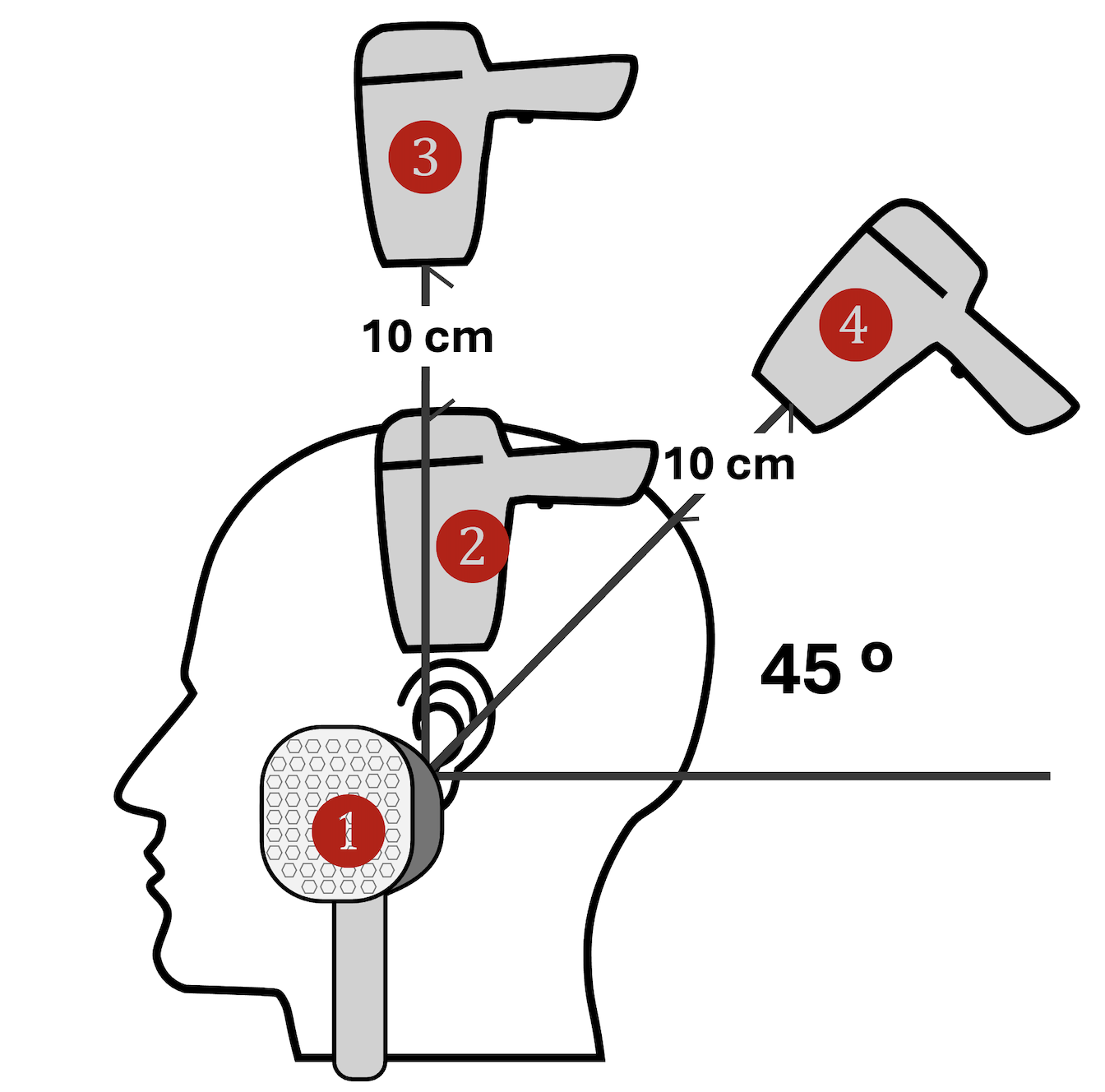
To accurately simulate realistic daily routines and user behavior, acoustic data was recorded across four distinct usage positions:
- Position 1: Directly facing the ear canal opening (10s recording).
- Position 2: Directed along the hair near the ear (30s recording).
- Position 3: 10cm above the crown of the head (30s recording).
- Position 4: 45-degree angle behind the head (30s recording).
Key Acoustic & Psychoacoustic Findings
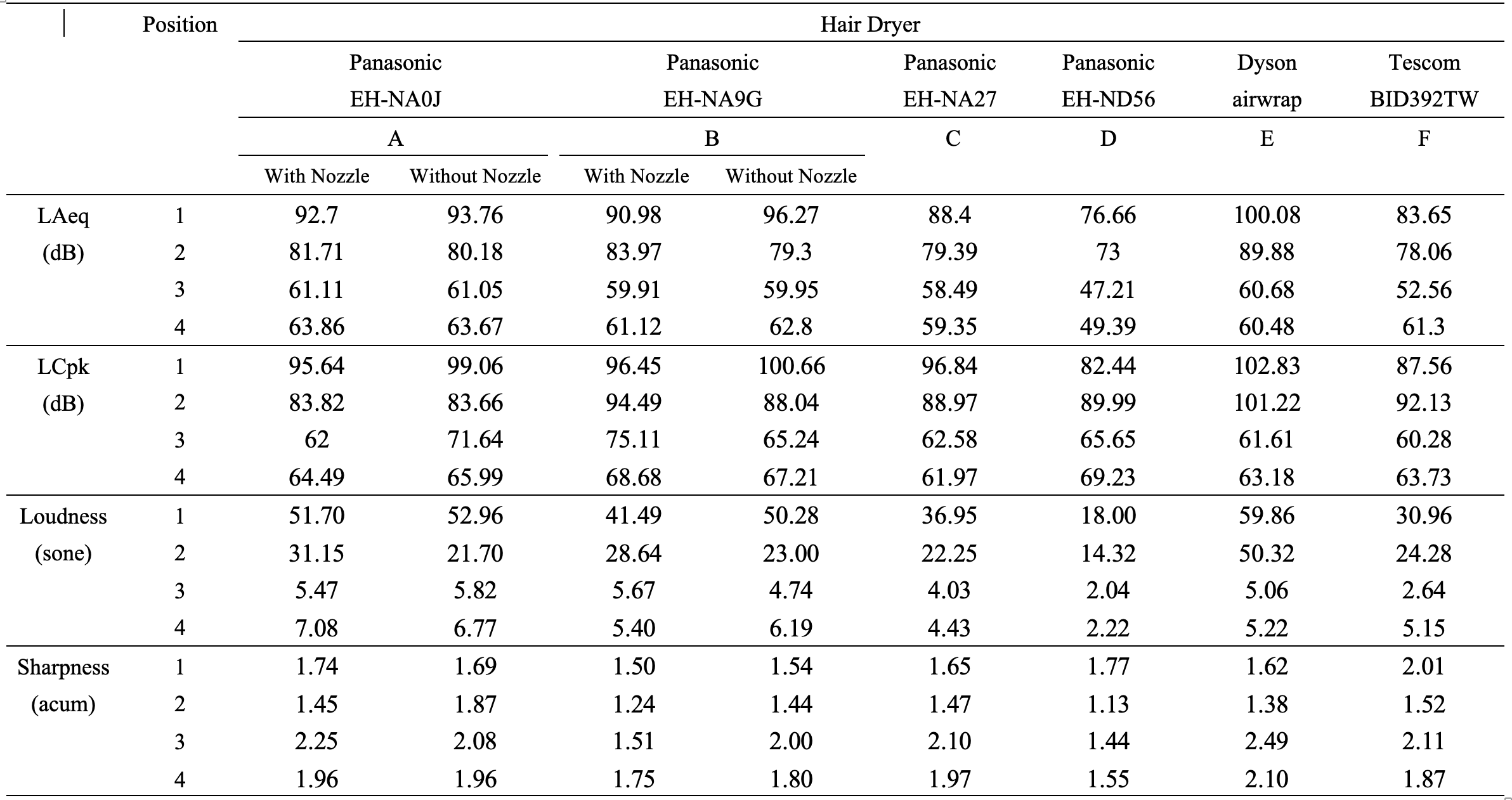
Our analysis revealed that when facing the ear canal (Position 1), five out of the six models exceeded the WHO’s 80 dBA safe limit, with equivalent continuous sound pressure levels (LAeq) ranging from 76.66 to 100.08 dB.
"Quiet" Models: A False Sense of Security?
Although models marketed as "Quiet" successfully achieved the lowest LAeq, their Peak Sound Pressure Level (LCpk) still reached up to 89.99 dB near the ear. This indicates that while continuous noise is reduced, sudden acoustic peaks remain a hidden risk.
"High-Speed" Models: Efficiency vs. Health
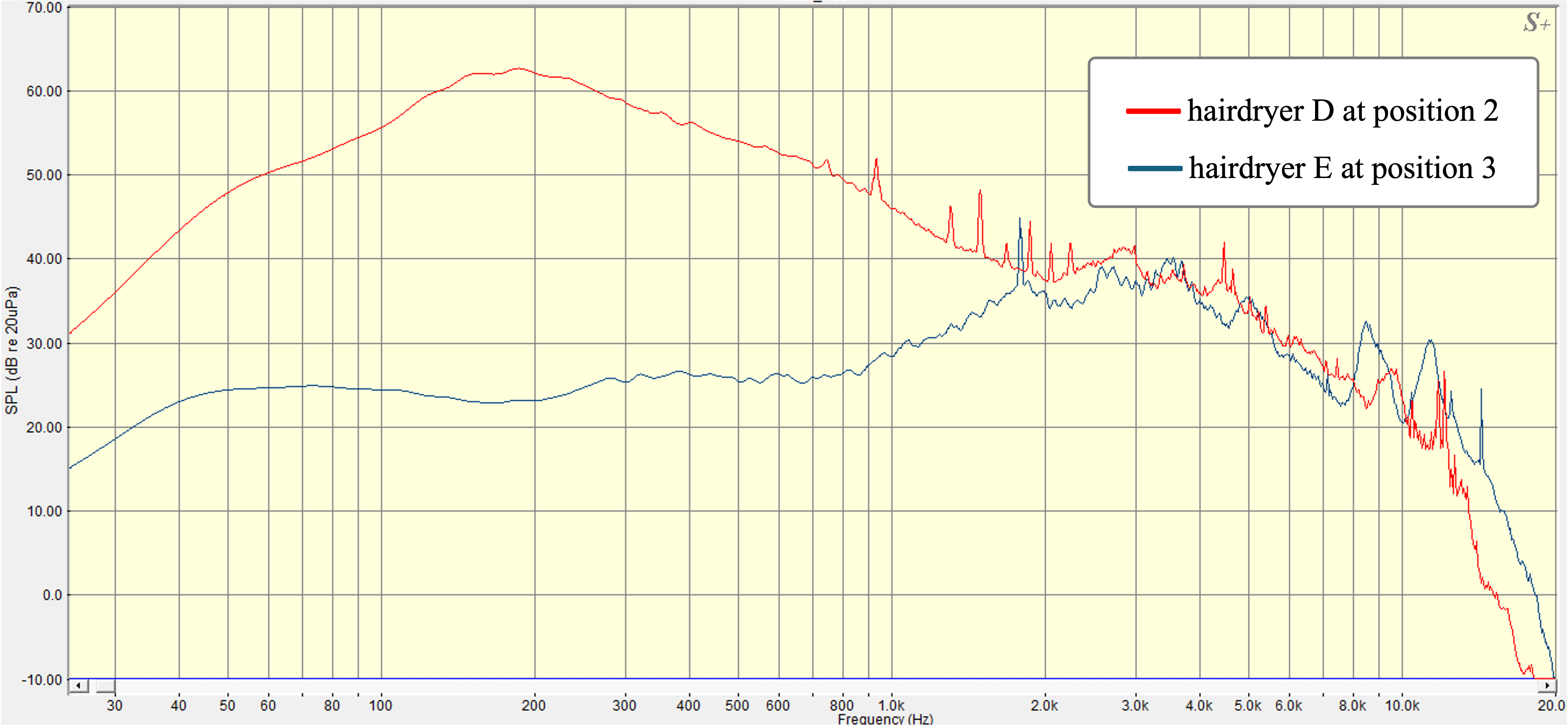
High-speed models exceeded 100 dB (LAeq) when facing the ear canal, producing the highest Loudness and Sharpness. The high-velocity airflow concentrates energy in high frequencies, resulting in a piercing sound that negatively impacts acoustic comfort.
Bridging Bench to Public Health
Scientific data achieves its true value when it changes public behavior. Recognizing the severe lack of awareness regarding domestic noise, I translated our complex acoustic findings into an accessible public health campaign.
In an article published on the PSA Hearing Care platform titled "Don't let daily noise steal your hearing: Why drying your hair should be a 'focused' task", we introduced the concept of "Mindful Drying" . We urged the public to stop multitasking (e.g., watching videos on phones while drying hair), as distraction invariably prolongs exposure time and inadvertently brings the high-decibel device dangerously close to the ear canal.
Read the Public Education ArticlePublications & Presentations
[Poster Presentation]
Ting, H. C., & Li, P. C. (2025). Measurement of Hair Dryer Noise Levels and Potential Auditory Health Risks.. The Speech-Language-Hearing Association of Taiwan.