Hearing Care Initiative for Older Adults in Long-Term Care Facilities
- The Challenge: Approximately 40% of seniors over 65 suffer from disabling hearing loss, elevating dementia risks by 4.9x. Yet, the medical intervention rate in Taiwan remains under 3%, and facilities lack systematic screening tools.
- The Solution: Implemented a 3-Phase Collaborative Model: Empowering caregivers with empathy and screening skills, conducting on-site audiological diagnostics, and executing deep, personalized aural rehabilitation.
- The Impact: Successfully validated that caregiver screening is highly accurate. Shifted elder residents from device rejection to active engagement, restoring vital communication channels and family bonds in their daily lives.
My Approach: The Three-Phase Intervention
To effectively bridge the gap between professional audiology and daily geriatric care, we deployed a systematic three-phase model. This ensures that hearing care is not just a one-off screening, but an integrated part of the long-term care ecosystem.
Caregiver Empowerment
Building frontline capacity through empathy and practical skills.
- Screening: Training on the 3-Step Hand Rub Hearing Screening (3SHRHS).
- Empathy & Communication: Workshops focusing on understanding elder behavior and utilizing effective communication strategies.
- Device Trials: Hands-on experience with assistive devices so caregivers understand the user experience.
Clinical Assessment
Professional on-site diagnostics to uncover hidden barriers.
- Diagnostics: Pure Tone Audiometry, Otoscopy, and Tympanometry.
- Findings: Identified 15 individuals with hearing impairment (better ear > 55 dB HL) and 16 with disabling hearing loss (better ear 40-55 dB HL).
- Action Plan: Delivered personalized reports with visual cue strategies to caregivers, and directly referred all identified cases to Phase 3 for targeted rehabilitation.
Intensive Rehab
A 6-session, highly personalized aural rehabilitation program.
- Focus: Shifting from mere amplification to device acceptance and cognitive training.
- Tools: Utilizing drawing exercises, masked speech, and various device form factors.
* See detailed clinical case studies below.
The Severity Spectrum
Clinical audiometry of 50 residents revealed a staggering 62% rate of disabling hearing loss requiring immediate intervention. We categorized these findings to prioritize the most critical cases for Phase 3 rehabilitation.
While general prevalence for seniors >65 is around 40%, our cohort reached 62%. This correlates with the advanced age (avg: 83 years), underscoring the urgent need for intervention in long-term care.
The Rehabilitation Toolkit
For individuals identified with significant communication barriers, providing a hearing aid is only the beginning. To overcome resistance and cognitive decline, I deployed a customized set of 6 core rehabilitation modalities:
Device Trial Protocol
Testing multiple form factors (TWS earbuds, neckband speakers, RIC hearing aids) to reduce stigma and find the most physically comfortable fit for the elder.
Auditory Memory Training
Utilizing "Listen & Draw" tasks and block-building exercises to train auditory memory, gradually increasing complexity from simple 3-word recall to executing multi-step physical instructions.
Speech-in-Noise & Masked Speech
Conducting exercises with the speaker's mouth covered and introducing controlled background noise to reduce reliance on visual cues and strengthen pure auditory focus.
Sound Source Identification
Teaching elders to distinguish between external environmental noise (e.g., AC hum) and device feedback, significantly reducing technology-induced anxiety.
Sound Diary & Self-Monitoring
Prompting elders to record their daily usage—including specific acoustic environments, communication partners, and subjective listening status—to cultivate self-awareness.
Communication Partner Training
Mandating the primary caregiver (often family members) to actively participate in all 6 sessions, ensuring they master device maintenance and empathetic conversational techniques.
Clinical Case Studies
Mrs. Lai (83, F)
- Zero self-perceived handicap despite poor speech recognition (WRS 44%).
- Strongly rejected hearing aids due to negative past experiences.
- Severe difficulty understanding multi-step sentences.
- Rebuilding Trust: Utilized the Device Trial Protocol, starting with non-medical neckband speakers before successfully transitioning to a RIC hearing aid.
- Cognitive Enhancement: Applied Drawing and Block-Building Auditory Training, expanding her capacity to understand complex 4-6 keyword instructions.
- Speech in Noise: Achieved >90% sentence recognition accuracy at +10dB SNR.
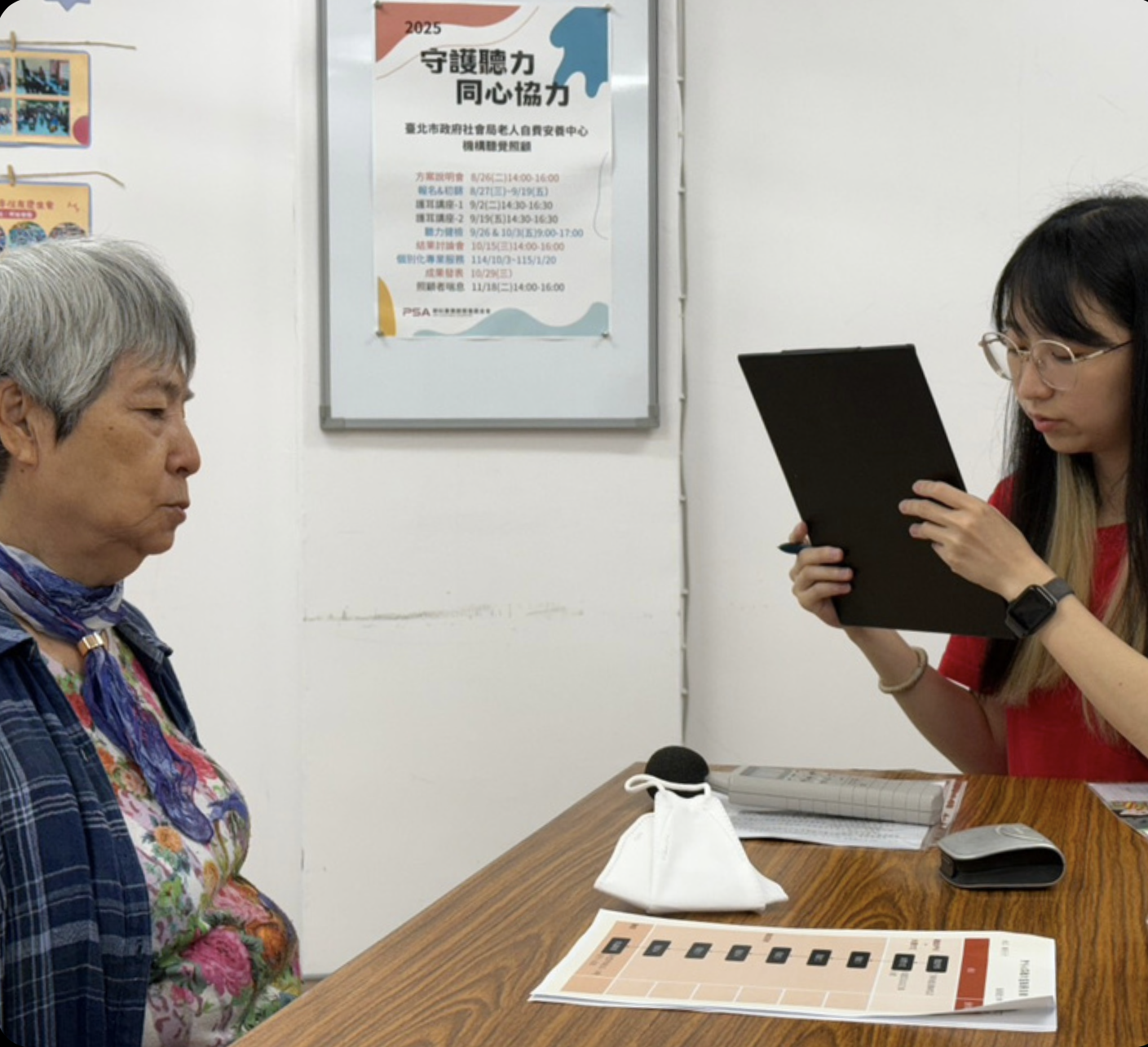
Resistance: Displayed skepticism and initial resistance towards the training due to past negative experiences.
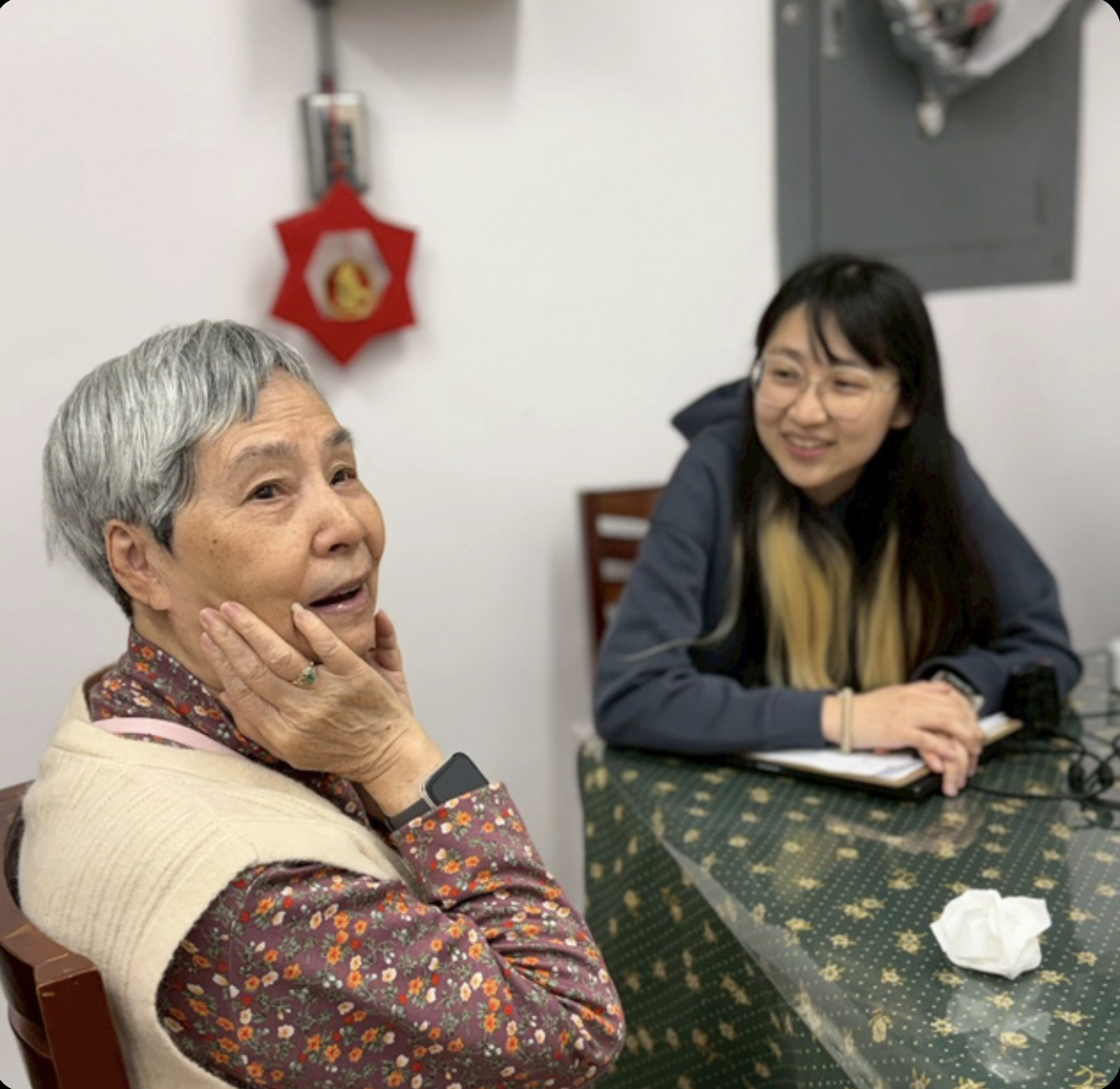
Engagement: Rebuilt trust. Proactively approached the audiologist to share her daily usage experiences and feedback.
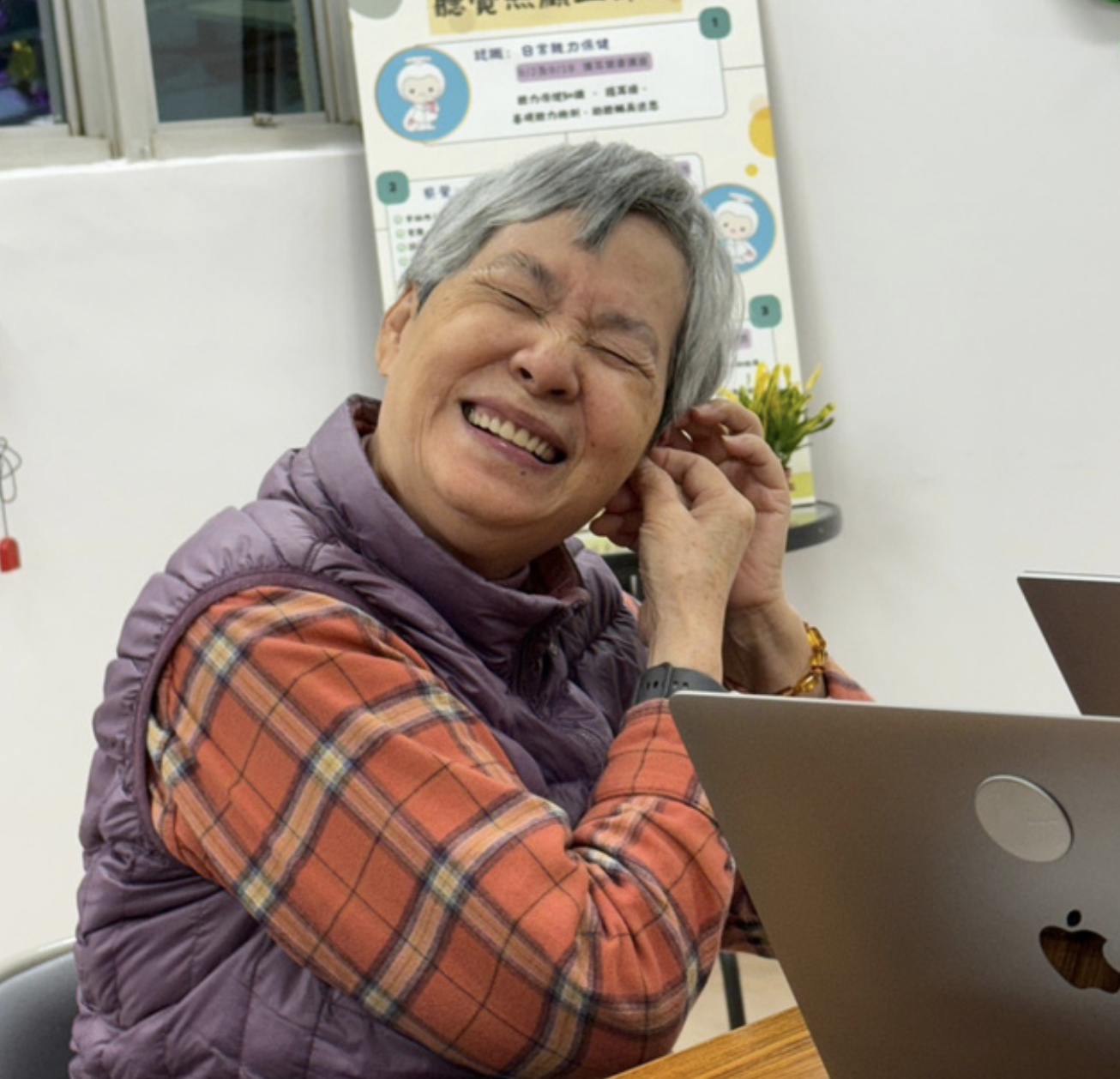
Independence: Happily putting on the device independently, eager to share her improved life and success with friends.
Mrs. Chen (92, F)
- Inconsistent usage driven by extreme "battery anxiety."
- Heavy reliance on visual cues, leading to communication breakdowns when caregivers wore masks.
- Confusion between environmental noise and device feedback.
- Tech Empowerment: Established a clear troubleshooting SOP and trained her to use a smartphone app for real-time battery monitoring.
- Auditory Focus: Utilized Masked Speech and Speech-in-Noise Recognition to reduce reliance on lip-reading and improve inferential abilities in complex acoustic environments.
- Environmental Awareness: Practiced Sound Source Identification to reduce anxiety caused by normal background noise.
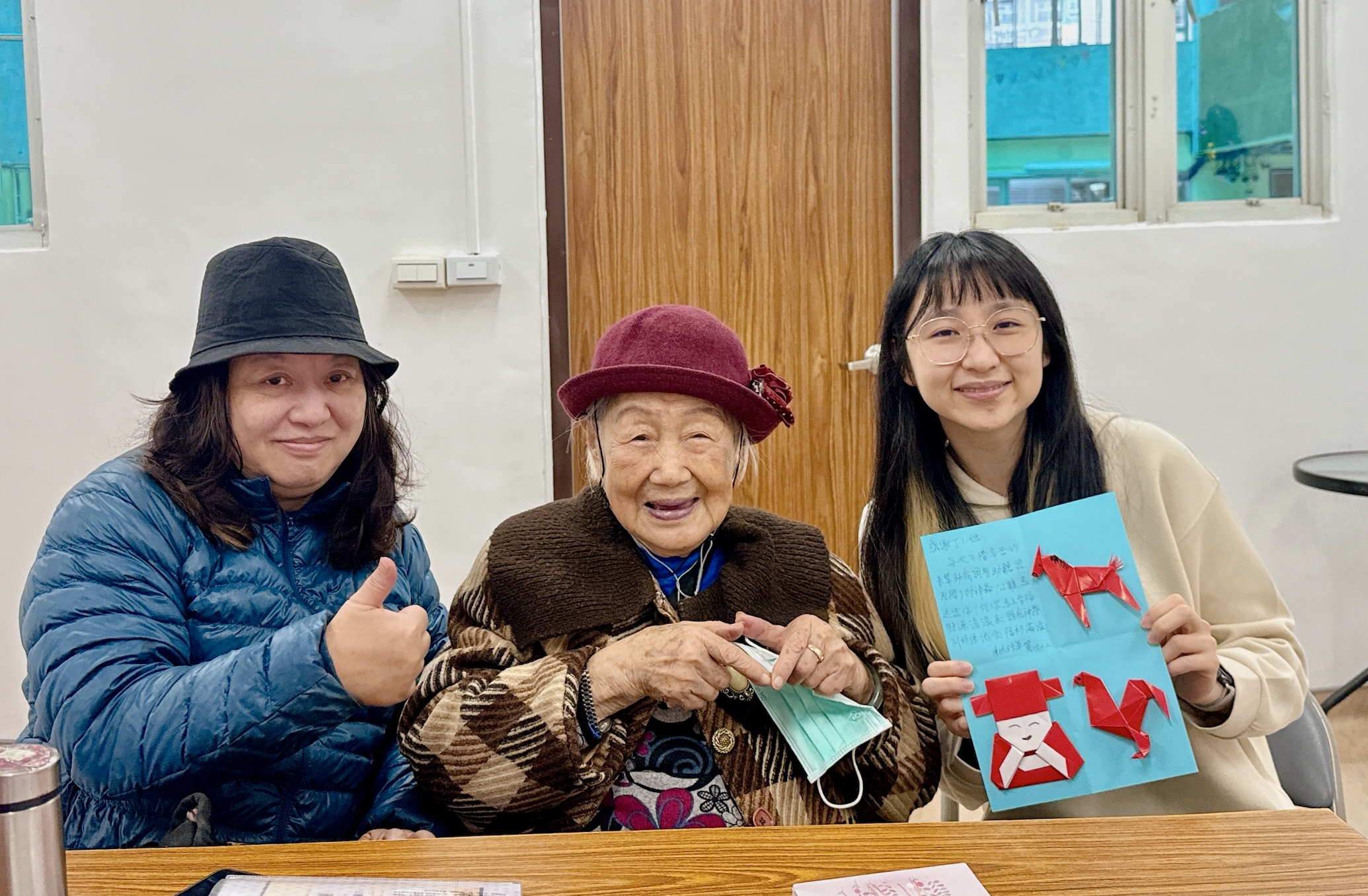
The True Impact: Initially, the relationship between Mrs. Chen and her daughter was severely strained. The daughter suspected the hearing aids were ineffective because her mother still refused to wear them, leading to constant communication breakdowns and frustration.
By mandating the daughter's participation in all 6 Communication Partner Training sessions, she learned how to empathetically assist with the device and apply proper conversational techniques. The result was not just improved auditory performance, but a beautifully restored family relationship—captured in their joyous smiles at the final session.