Our ears are among the most hardworking sensory organs in the human body, constantly monitoring the environment around us. We put on earphones to traverse time and space, immersing ourselves in the beauty of sound and music.
However, amidst the overwhelming auditory stimuli of modern life, our ears are suffering from severe "burnout." When exposed to excessive volume or prolonged noise, the delicate hair cells inside our inner ear can be irreversibly damaged, leading to temporary or permanent Noise-Induced Hearing Loss (NIHL).
1. The Global Listening Crisis
According to the World Health Organization (WHO), the way we consume audio today is creating a hidden public health crisis among younger generations (ages 12 to 35).
2. How Loud is "Too Loud"?
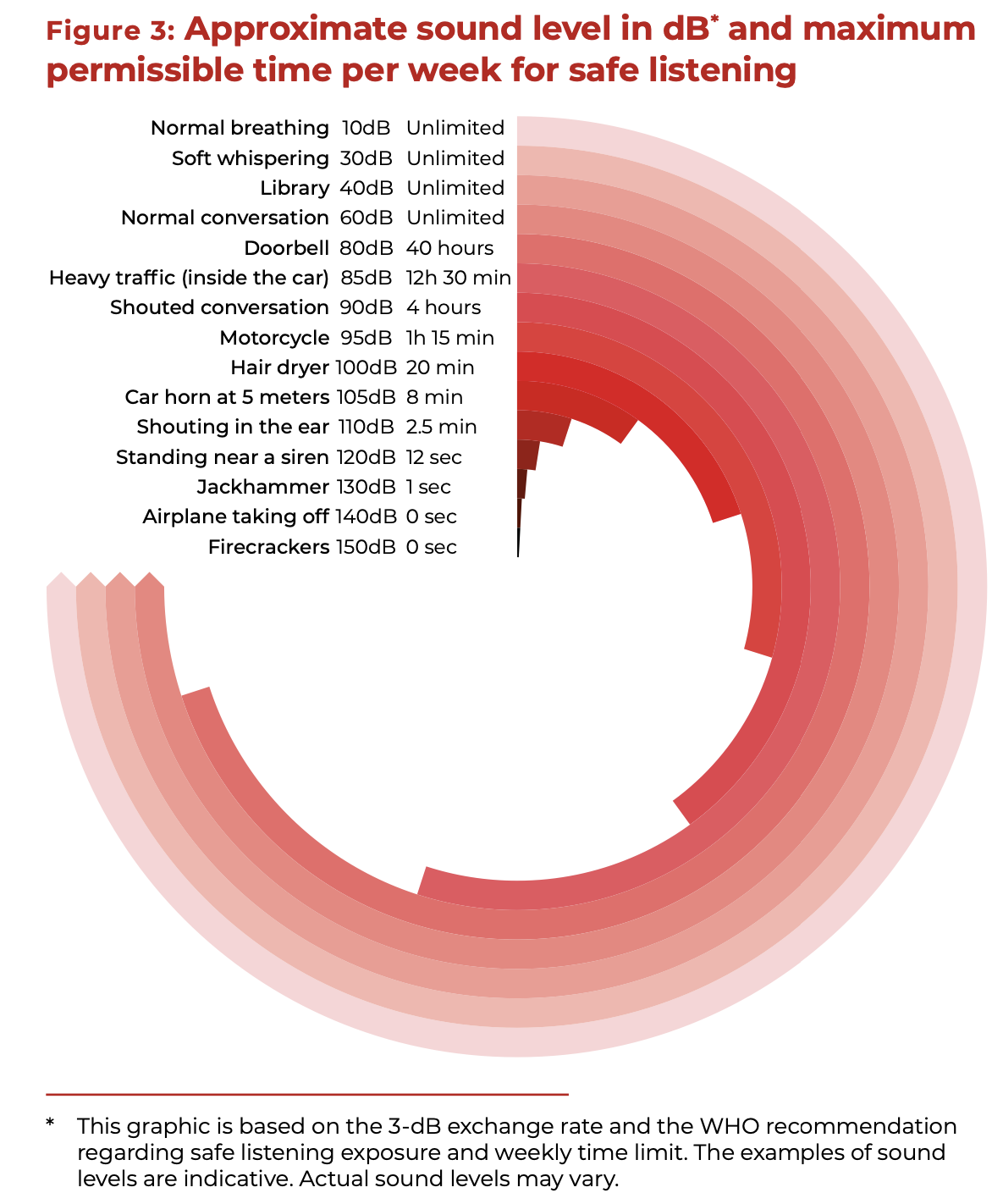
We all know we should avoid "loud" environments, but where is the line drawn? In audiology, we use the concept of "Noise Exposure Dose". Just like radiation, acoustic damage is cumulative—it depends on how loud the sound is, multiplied by how long you listen to it.
The WHO recommends a strict limit. At 80 decibels (dB), you can safely listen for 40 hours a week. However, due to the logarithmic nature of sound, just a small increase in volume drastically cuts your safe listening time.
Interactive Noise Dose Calculator
Move the slider to see how increasing volume exponentially cuts your safe listening limit.
3. Six Steps to Protect Your Hearing
Among all factors causing hearing impairment, NIHL is uniquely preventable. Incorporating these simple habits into your daily life forms a powerful defense line for your auditory health.
1. Turn It Down
Keep your personal audio device volume below 60%. If possible, invest in Active Noise Cancelling (ANC) earphones to avoid instinctively turning up the volume in noisy settings.
2. Limit Duration
If you cannot avoid a loud environment, actively reduce the time spent there. Give your ears adequate "quiet breaks" to recover from acoustic fatigue.
3. Monitor Exposure
Utilize built-in smartphone health apps or third-party tools (like HearAngel or dbTrack) to track your daily headphone audio levels and set automated volume limits.
4. Use Protection
When exposed to massive noise (concerts, construction), physically move away from the sound source (speakers) or proactively wear acoustic earplugs or earmuffs.
5. Watch for Signs
Don't ignore the red flags: experiencing tinnitus (ringing in the ears), struggling to hear high-pitched sounds (doorbells), or having difficulty understanding speech in crowded places.
6. Get Checked
If you notice any signs of hearing loss, seek a professional audiological evaluation immediately. Annual screenings are highly recommended, especially for those regularly exposed to high noise.
The "60-60 Rule" for Safe Listening
A 2020 survey by the PSA Charitable Foundation revealed a concerning trend in Taiwan: over 60% of people use earphones in noisy environments, and more than 50% instinctively turn up the volume while commuting to hear more clearly.
To combat this, we strongly advocate the "60-60 Rule": When using personal audio devices, keep the volume below 60% of the maximum, and limit your continuous listening time to a maximum of 60 minutes per day.